In short
Delano London will include The Source wellness space. How to plan trimless, plaster-in lighting for spas, treatment rooms and wellness areas.
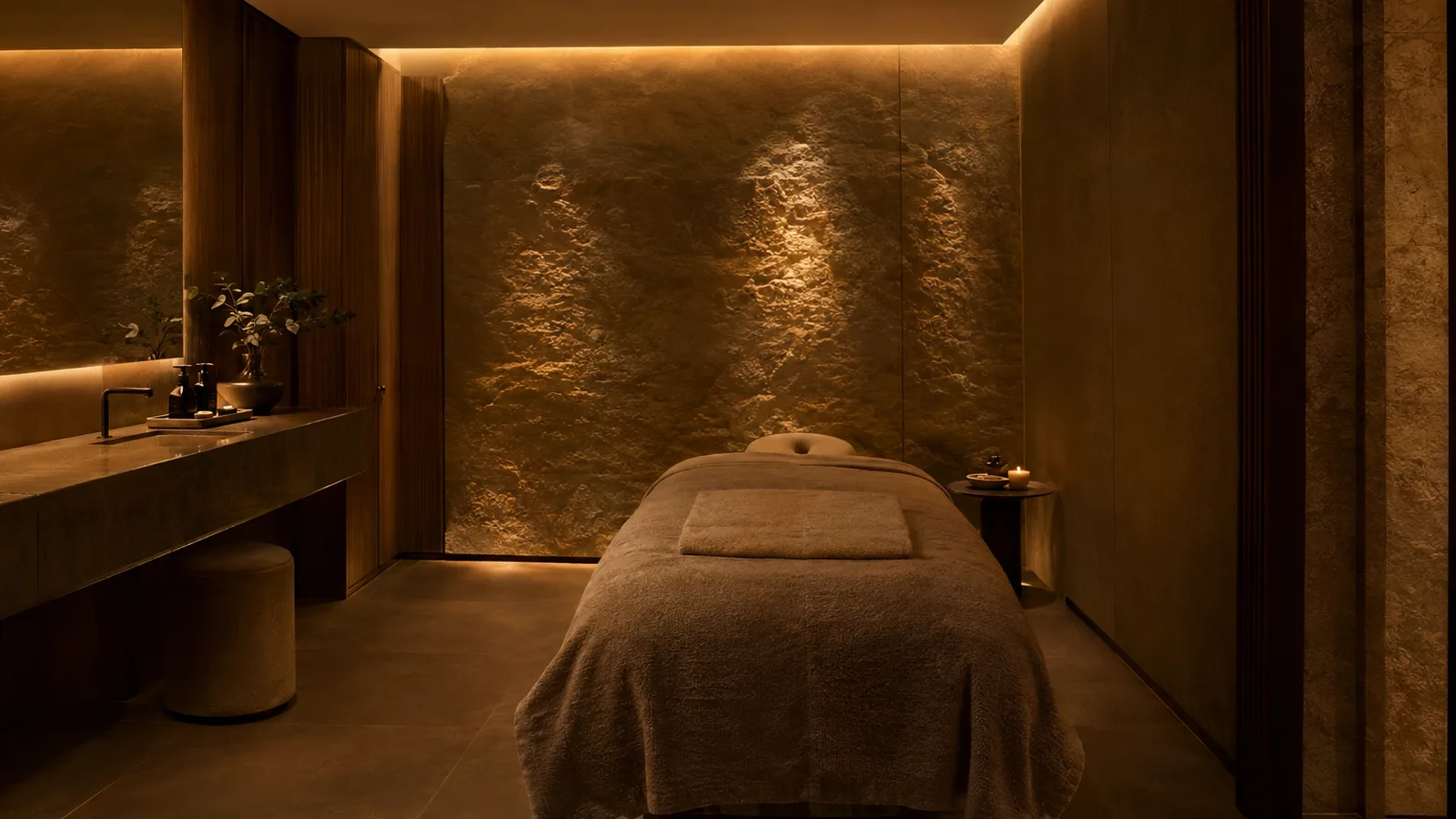
On 4 November 2026, Sleeper published a first look at Delano London, overlooking Kensington Gardens and Hyde Park. The hotel, designed by Archer Humphryes Architects, is slated to open in early 2027 with 67 keys across five floors. It will include The Source by Delano, a wellness space focused on "restorative and rejuvenating movement and longevity", with contrast therapy and treatment spaces (Sleeper).
Sleeper does not describe the lighting at Delano London, so this guide is not about that project. It looks at why wellness spaces suit trimless lighting, and how to detail it.
Why trimless suits wellness spaces
Spas and wellness areas are designed to feel calm. Visible fittings, bezels and bright sources work against that. Trimless lighting is plastered into the ceiling or wall, so the light appears with no visible frame. That suits:
- Treatment rooms, where guests lie looking up at the ceiling
- Relaxation rooms, where soft, indirect light is wanted
- Changing areas, which need practical light without harshness
- Corridors between spaces, where light can lead the way
- Pool and thermal areas, subject to the right IP ratings and electrical design
Light from the guest's point of view
In a treatment room, guests spend much of their time lying down. A downlight directly above the couch can shine straight into their eyes. Instead:
- Place downlights away from the couch, or use wall and cove lighting
- Use deep-set, low-glare trimless downlights. See glare and trimless lighting
- Light walls and textures rather than the floor. See trimless wall lighting details
- Dim everything, and give therapists simple scene control. See trimless lighting controls
Wet areas and IP ratings
Wellness spaces often include showers, steam rooms, saunas and pools. These need careful electrical design:
- BS 7671 sets out special locations, including bathrooms and swimming pools, with zones and minimum IP ratings
- In bathroom zones 1 and 2, luminaires need at least IPX4
- Saunas and steam rooms have their own requirements, so check luminaire suitability with the manufacturer
- Always involve a qualified electrician and follow BS 7671
Trimless profiles and downlights used in wet areas need an IP rating suitable for the zone. See our guide to trimless lighting in plasterboard for moisture-resistant board details.
Detail options
| Detail | Effect | Typical location |
|---|---|---|
| Trimless downlights | Clean points of light | Changing rooms, corridors |
| Plastered-in wall slots | Light grazing textured walls | Treatment rooms, relaxation rooms |
| Cove or shadow-gap details | Indirect light off the ceiling | Relaxation rooms, lounges |
| Continuous trimless lines | Lines that lead the way | Corridors, reception |
| Joinery-integrated light | Light in shelving and vanities | Reception, changing areas |
For more, see continuous trimless lines, corners and shapes and joinery and shelving.
Colour temperature and mood
Warm white is the usual choice for relaxation, but treatment and changing areas may need neutral light for practical tasks. Keep it consistent within each zone. See colour temperature for trimless lighting. Tunable white can shift from neutral in the morning to warm at night.
Coordination
Plaster-in lighting has to be planned before boards go up:
- Agree set-out with the ceiling and wall drawings
- Plan driver access, especially in wet areas. See maintenance
- Build a mock-up of a treatment room. See mock-ups
- Prevent cracks with the right plaster and jointing. See preventing cracks
- Follow the right order on site. See installation sequence
Spas in hotels and homes
Hotel spas sit alongside bedrooms, bars and restaurants, so the lighting should feel part of the same building. See trimless lighting for hotels and receptions. Home spas and luxury bathrooms use the same principles at a smaller scale: see trimless lighting for homes.
Questions to ask at design stage
- Where will guests be lying, sitting or standing?
- Which surfaces have texture worth lighting?
- Which areas are wet, and what IP ratings are needed?
- How will therapists control the light?
- Can every driver be reached without damaging the finish?
Common mistakes in wellness lighting
- Downlights directly above treatment couches
- Bright, cool light in relaxation rooms
- Fittings in wet areas without a suitable IP rating
- No access to drivers once the plaster is finished
- Too many scenes, so staff do not use the controls
Refurbishing existing spas
Many hotel and gym spas are refurbished every few years. Plaster-in lighting can be added during a refurbishment, but it takes more planning than in new build, because ceilings and walls may need to be opened up. Our guide to trimless lighting in refurbishments covers the options, and trimless lighting in concrete ceilings explains details for solid structures. Where a full refit is not planned, existing fittings can sometimes be upgraded: see relumen8.com on retrofit for hospitality.
Done well, the lighting in a wellness space is felt more than seen.
How 299 Lighting can help
299 Lighting supplies trimless and plaster-in lighting, including bespoke profiles, linear lighting and downlights. Our project support team can help detail schemes for wellness spaces. Send us your drawings to start. For downlights in hotel bathrooms, see recessedlighting.co.uk on hotel bedrooms and bathrooms, and for pendants in hotel bedrooms, suspendedlighting.com on hotel bedrooms.
Further reading at 299 Lighting
Next steps on trimlesslighting.com
Planning a trimless ceiling?
Send us your reflected ceiling plan. We'll come back with a shortlist, plaster-in details and lighting calculations.
Start a project →Frequently asked questions
When does Delano London open?
Sleeper reports that Delano London is slated to open in early 2027.
Why does trimless lighting suit spas?
It has no visible bezel, so light appears from the surface. That supports a calm, uncluttered look in treatment and relaxation rooms.
What IP rating is needed in bathroom zones?
BS 7671 requires at least IPX4 for luminaires in bathroom zones 1 and 2. Other special locations have their own rules.
How should treatment rooms be lit?
Avoid downlights directly over the couch, light walls and coves instead, and make everything dimmable.