In short
How to use trimless downlights, spotlights and track in art galleries and exhibition spaces: wall washing, flexibility, colour rendering and ceilings.
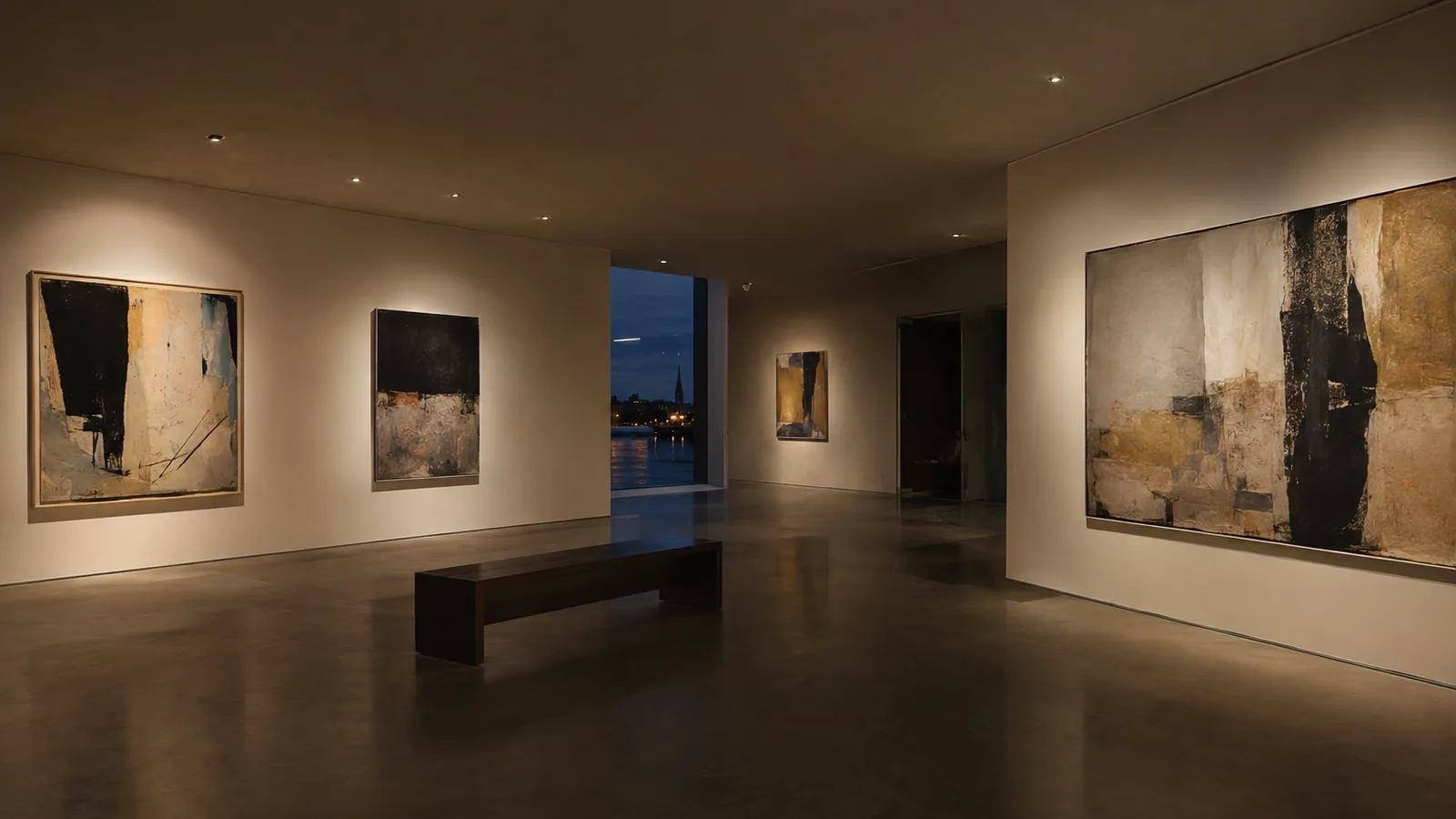
Frieze London and Frieze Masters returned to The Regent's Park from 14 to 18 October 2026 (Frieze), bringing together almost 300 galleries from 48 countries and regions (Canvas). Art fairs are temporary, but the galleries behind them need permanent spaces where the light does justice to the work.
Trimless lighting suits galleries because the ceiling stays clean and the art takes centre stage. This guide covers how to plan it.
Why trimless suits galleries
In a gallery, the ceiling should not compete with the work on the walls. Trimless downlights, spotlights and track are plastered in, so only the light aperture is visible. Read what is trimless lighting? for the basics and trimless vs trimmed lighting for the trade-offs.
The lighting layers
| Layer | Typical approach | Why it matters |
|---|---|---|
| Wall washing | Trimless wall washers or asymmetric downlights in a line parallel to the wall | Even light on hanging walls |
| Accent | Adjustable trimless spotlights or plastered-in track | Picks out individual works and sculpture |
| General | Trimless downlights or linear light lines | Lets visitors move around safely |
| Feature | Light lines or coves | Shapes the space without visible fittings |
Flexibility for changing exhibitions
Exhibitions change, so the lighting has to be adjustable. Plastered-in track lets curators add, move and aim spotlights without new holes in the ceiling. Adjustable trimless spotlights work well where the hang changes less often. Our guides to trimless linear lighting and continuous trimless lines cover the linear options, and trimless downlights covers fixed and adjustable heads.
Setting out for wall washing
Wall washing looks best when fittings line up with the hanging wall and with each other. Agree the setting-out with the architect early:
- Set the line of fittings parallel to the wall at an even distance
- Coordinate with ceiling joints, sprinklers, detectors and air grilles
- Check the beam pattern reaches the bottom of the hanging zone
- Mock up a section of wall before the ceiling is closed
Read trimless lighting mock-ups and BIM and drawing details for how to coordinate.
Colour rendering and colour temperature
Art should look the way the artist intended. Choose fittings with high colour rendering and a consistent colour temperature across every fitting in a space. See colour temperature and CRI for trimless lighting. Glare matters too: deep-set optics and accessories such as snoots and louvres help keep the source out of view, as explained in glare control in trimless lighting.
Protecting the work
Light can damage some materials over time. Agree light levels, exposure times and any limits on ultraviolet light with the conservator or lender before you finalise the scheme. Controls help here: dimming and scene setting let staff lower light levels for sensitive works and raise them for others. See controls for trimless lighting.
Ceilings and installation
Gallery ceilings are often plasterboard, but some spaces have concrete or vaulted soffits. Each needs a different detail:
- Plasterboard: see trimless lighting in plasterboard
- Concrete: see trimless lighting with concrete ceilings
- Historic buildings: see trimless lighting in listed buildings
Plaster-in fittings must go in at the right stage of the ceiling programme. Our guide to the installation sequence explains when. Galleries are repainted often, so access for maintenance also matters: read maintaining trimless lighting.
Galleries in other buildings
Many galleries sit inside retail, hospitality or office buildings. For shop-style display, see trimless lighting for retail. For recessed accent options, see adjustable recessed downlights, and for suspended feature lighting in atria, see suspended lighting for high ceilings.
Writing the brief
A good gallery lighting brief saves changes later. Before design starts, agree:
- How often exhibitions will change and who will adjust the lighting
- The types of work to be shown, such as paintings, works on paper, sculpture or video
- Any conservation requirements from lenders or the gallery's own collection policy
- Whether the space will also be hired for events, which may need extra scenes
- How the lighting will be maintained, and whether the ceiling is easy to reach
| Question | Why it matters |
|---|---|
| Fixed hang or changing shows? | Decides between fixed spotlights and plastered-in track |
| Ceiling height and type? | Affects beam angles, access and the trimless detail |
| Daylight in the space? | May need blinds, controls or different light levels by time of day |
With the brief agreed, the lighting designer can set out fittings, run calculations and coordinate with the ceiling and services early.
How 299 Lighting can help
299 Lighting supplies architectural lighting, including made-to-measure trimless systems and the UK-made Clyde. We can provide layouts, calculations and project support. Send us your gallery drawings to get started.
Further reading at 299 Lighting
Next steps on trimlesslighting.com
Planning a trimless ceiling?
Send us your reflected ceiling plan. We'll come back with a shortlist, plaster-in details and lighting calculations.
Start a project →Frequently asked questions
When was Frieze London 2026?
Frieze London and Frieze Masters ran from 14 to 18 October 2026 in The Regent's Park, London.
Why use trimless lighting in a gallery?
The fittings are plastered into the ceiling, so only the light aperture shows and the art stays the focus.
Is track or fixed spotlights better for a gallery?
Track suits spaces where exhibitions change often, as spotlights can be moved without new ceiling holes. Fixed adjustable spotlights suit more permanent displays.
How do you protect light-sensitive artwork?
Agree light levels, exposure and any ultraviolet limits with the conservator or lender, and use dimming controls to set suitable levels.