In short
How to use trimless downlights and plaster-in profiles in listed and heritage interiors: consent, where to place them, fixing and reversibility.
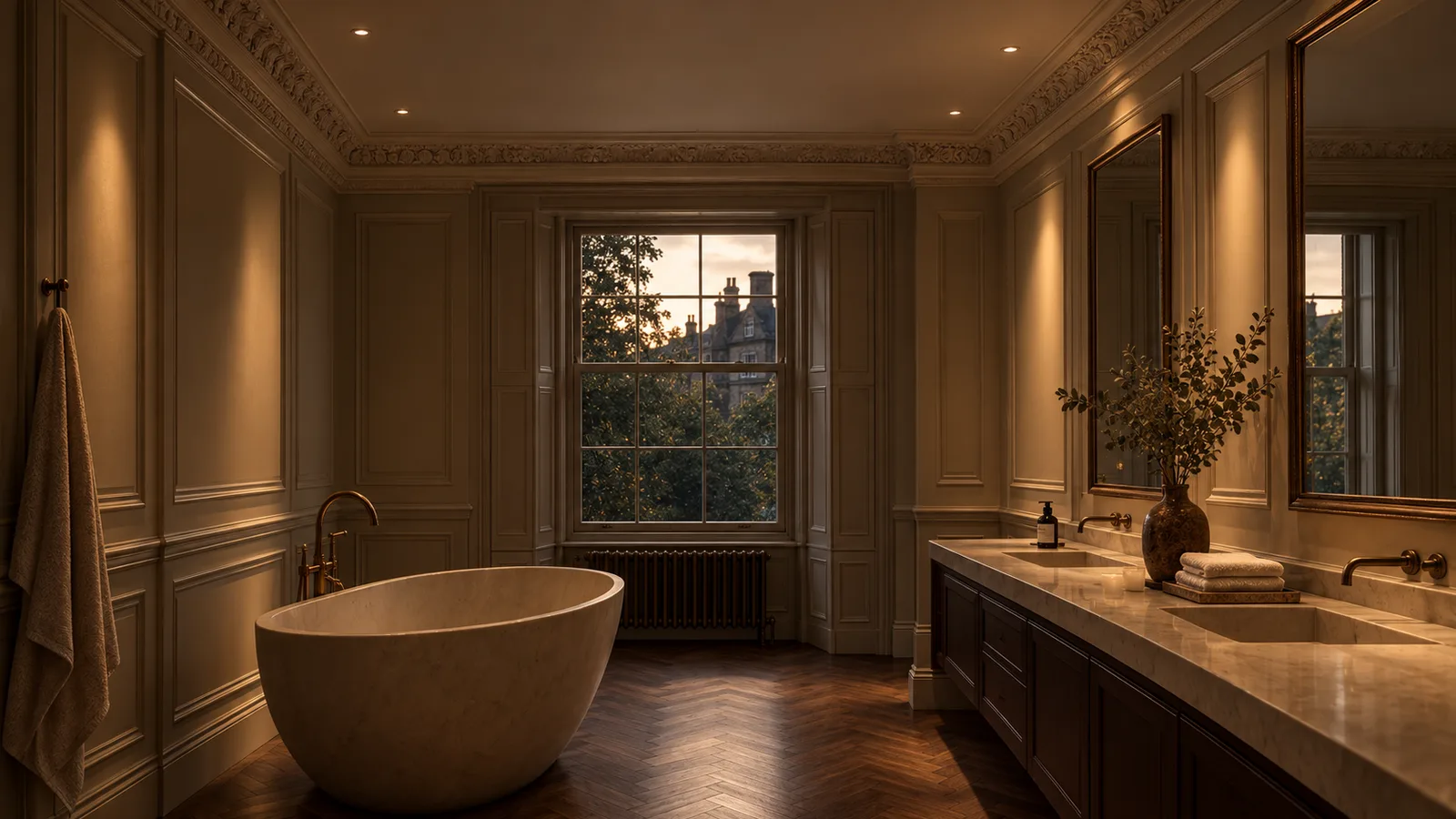
Historic buildings are being converted into luxury hotels and residences. Waldorf Astoria London is preparing for its autumn debut in Admiralty Arch, the Grade I listed building on The Mall designed by Sir Aston Webb, which will host overnight guests for the first time and includes a ballroom with a restored Murano chandelier (GDN Online). Projects like this raise the same question again and again: where, if anywhere, does modern plaster-in lighting belong in a historic interior?
Trimless lighting can be the quietest way to light a heritage space, because the light source almost disappears. It can also be the most damaging, because it means cutting into ceilings and walls. This guide sets out how to approach it.
Start with consent
Any work affecting the character of a listed building normally needs listed building consent, and that includes cutting into historic plaster. Talk to the conservation officer early and agree principles before detailing. This is general guidance only: the consent route is set by the local planning authority.
The questions usually asked are:
- Is the ceiling or wall original, or a later replacement?
- Can the lighting go in new or modern fabric instead?
- Is the work reversible?
- Does the lighting change how the space is read?
Where trimless works best in heritage interiors
| Location | Why it works | What to watch |
|---|---|---|
| New partitions and linings | Modern fabric, no loss of historic material | Coordinate with services and acoustic layers |
| Replacement ceilings | Often already modern plasterboard | Confirm with a survey before assuming |
| Bulkheads, coves and joinery | Light can be hidden without touching historic ceilings | Detail access for drivers |
| Bathrooms and back-of-house | Lower significance, practical needs | IP rating and maintenance |
| Original decorative plaster | Usually avoid | Use free-standing, wall or concealed light instead |
Our guides to trimless lighting in walls, bulkheads and coves and trimless lighting in joinery show details that leave historic surfaces untouched.
Detailing for historic fabric
Survey the ceiling first
Lath and plaster, timber joists and old fixings behave differently from modern board. A void survey shows depth, joist positions and any services or hazards. Trimless plaster-in kits need enough depth and a sound substrate to bond to.
Keep openings small and few
In older buildings, a few well-placed small-aperture trimless downlights often look better than a full grid. Fewer cuts means less loss of fabric and less risk of cracking.
Plan for reversibility
Where trimless is used in modern linings, record each position and keep drivers accessible. A future owner should be able to remove or replace the lighting without damaging the room.
Mind the movement
Old buildings move with seasons and moisture. Use proper plaster-in kits, reinforce joints, and allow the plaster to cure before decoration. See the installation sequence.
Light quality in historic interiors
Heritage spaces are often about texture, mouldings and colour. Low-glare optics stop the ceiling becoming a field of bright points. Warm white at 2700K or 3000K and CRI 90 or above usually suits historic materials. Our guide to colour temperature and CRI has more.
Decorative fittings, such as restored chandeliers, normally remain the focus. Trimless lighting should support them quietly, not compete. For residential-style decorative fittings, see chandeliers.
Mock-ups help with consent
A mock-up on site lets the conservation officer, client and designer see the effect before any historic fabric is touched. It also tests the plaster finish. Read why trimless lighting mock-ups matter.
Alternatives when trimless is not right
Sometimes the best heritage lighting cuts into nothing at all. Uplighting from cornices, concealed light in joinery, picture lights, floor and table lamps and restored decorative fittings can light a historic room well without new openings. Trimless lighting then becomes one tool among several, used only where it adds something and does no harm. A good scheme often combines them: discreet trimless downlights in a modern bathroom or corridor, and decorative or concealed light in the principal rooms.
Related guidance
If existing historic or feature fittings are being kept, LED retrofit for listed buildings explains how to update the light source without losing the luminaire. For linear plaster-in runs, see recessed linear plasterboard detailing. For downlights more widely, recessed lighting in refurbishments.
299 Lighting can help with surveys, mock-ups and project support. Contact the team with drawings and photographs of the space.
Further reading at 299 Lighting
Next steps on trimlesslighting.com
Planning a trimless ceiling?
Send us your reflected ceiling plan. We'll come back with a shortlist, plaster-in details and lighting calculations.
Start a project →Frequently asked questions
Can you install trimless lighting in a listed building?
Often, yes, but any work that affects the character of a listed building normally needs listed building consent. Agree the approach with the conservation officer early.
Where is trimless lighting least harmful in a heritage interior?
In new partitions, replacement ceilings, bulkheads, coves and joinery, where it does not cut into historic fabric.
Is trimless lighting reversible?
It can be designed to be, by keeping it in modern linings, recording positions and keeping drivers accessible so it can be removed without damage.
What colour temperature suits historic interiors?
Warm white at 2700K or 3000K with CRI 90 or above usually suits historic materials and finishes.