In short
The Elizabeth line won the Stirling at 30 public vote. What its integrated lighting teaches about plaster-in and trimless details in any building.
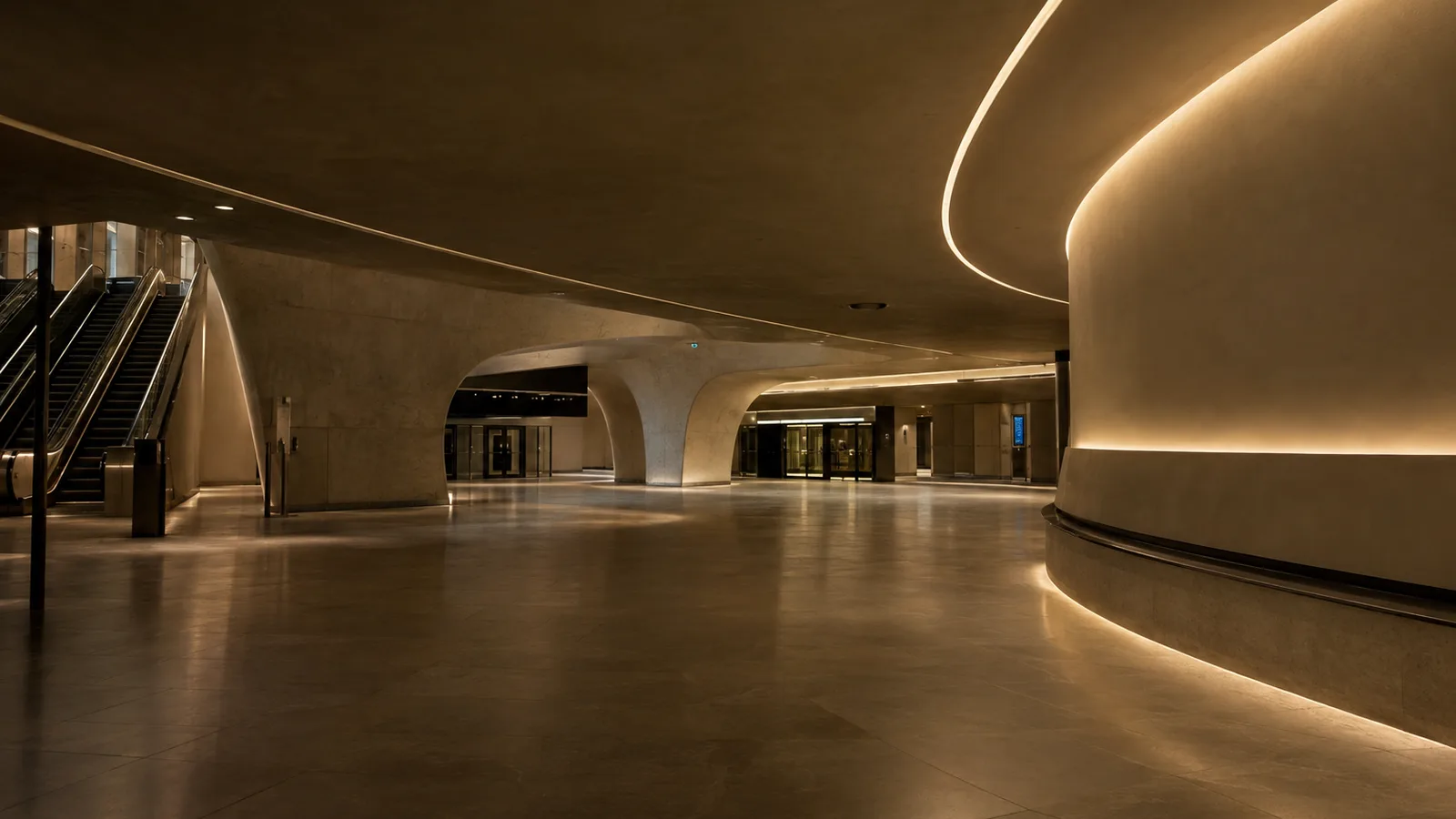
On 15 October, at the RIBA Stirling Prize ceremony, the Elizabeth line was chosen as the public's favourite Stirling Prize winner of the past 30 years. arc magazine reported on 28 October that lighting designers Equation Lighting Design, who developed the line-wide lighting scheme, are celebrating the "Stirling at 30" public vote win (arc magazine). The line won the Stirling Prize itself in 2024.
arc describes a scheme that integrates illumination into the architecture "rather than treating lighting as a separate visual feature". Equation's managing director, Maida Hot, said much of their work is about creating environments people navigate "often without being consciously aware of the lighting itself".
That idea is at the heart of trimless lighting. You may not be designing a railway, but the same principles apply to offices, hotels and homes.
What the Elizabeth line scheme does
According to arc, the scheme uses:
- Indirect lighting through concourses, escalator tunnels and platforms, to show the scale and form of the spaces and minimise harsh shadows and reflections
- Two colour temperatures: 5,000K cooler white in transition spaces and 3,000K warmer white in wayfinding areas
- Diffused luminous surfaces and controlled illumination to reduce glare
- Good vertical illuminance, to help with facial recognition, signage and obstacle detection
- A coordinated family of luminaires detailed to integrate with the architecture
Five lessons for trimless design
Design light into the architecture
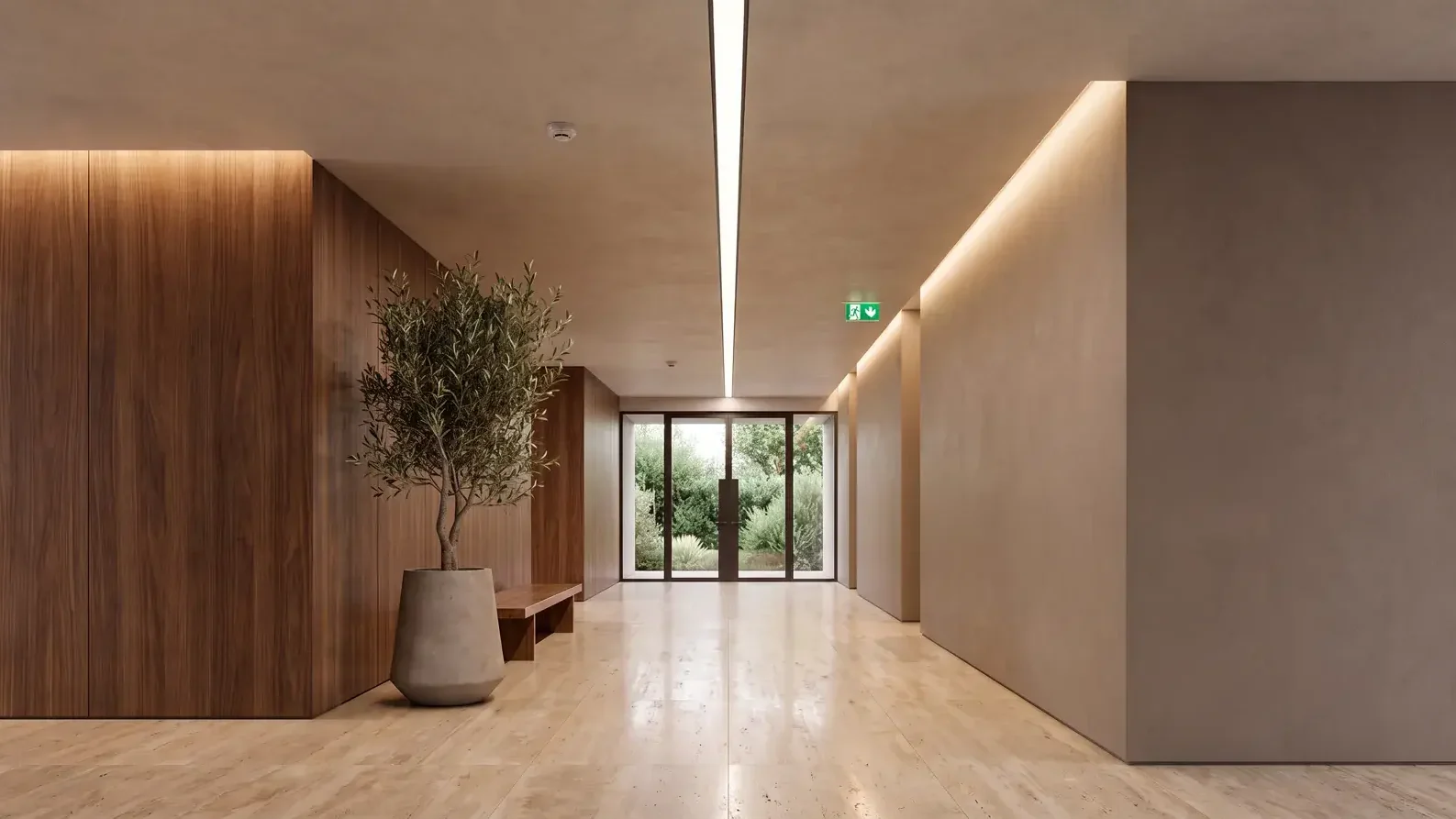
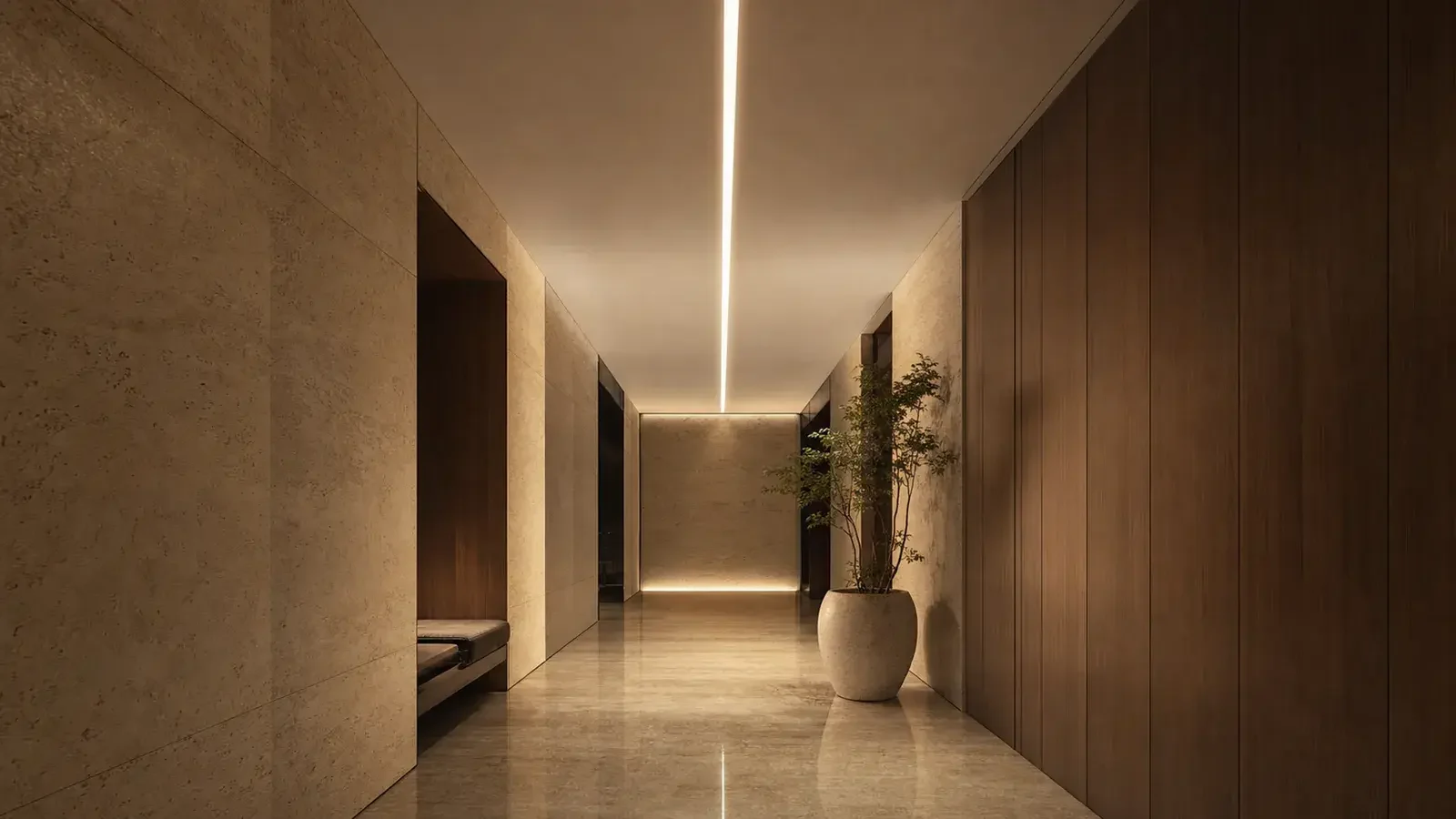
The most important decision is made early: lighting is part of the ceiling and wall design, not an item added later. Trimless profiles and downlights are plastered in, so the ceiling shape, joints and set-out need to be agreed with the architect. Read how trimless lighting is installed and the installation sequence.
Light surfaces, not just floors
Indirect and wall-washing light makes a space feel bigger and calmer. Trimless wall details and coves can do this in smaller buildings. See trimless wall lighting details and corners and shapes.
Use colour temperature with purpose
The Elizabeth line uses colour temperature to tell spaces apart. In a building, you might use warmer light in receptions and hospitality areas and neutral white in work areas. Keep it consistent within each zone. See colour temperature for trimless lighting.
Control glare
Hidden sources and diffused surfaces help, but deep-set optics and good diffusers matter too. Read glare and trimless lighting.
Think about vertical light
Seeing faces and signs clearly depends on light on vertical surfaces. A lighting plan that only counts lux on the floor can miss this. Walls, coves and wall washers help.
Integrated details compared
| Detail | What it does | Typical use |
|---|---|---|
| Trimless linear in a ceiling | Clean lines that follow the architecture | Corridors, receptions, offices |
| Trimless downlights | Points of light with no visible bezel | Hotels, homes, galleries |
| Plastered-in wall slots | Washes walls with light | Corridors, stairs, receptions |
| Shadow-gap or cove details | Indirect light off a ceiling or wall | Lounges, bedrooms, meeting rooms |
| Joinery-integrated light | Light built into shelving and units | Retail, bars, kitchens |
For more, see continuous trimless lines, corridors, receptions and joinery and shelving.
Get the details right
Integrated lighting depends on coordination. A few points make the difference:
- Agree set-out with the ceiling and wall drawings early
- Plan access to drivers before boards go up: see maintenance
- Use the right plaster and jointing to avoid cracks: see preventing cracks
- Build a mock-up for key spaces: see mock-ups
- Share BIM and CAD details with the team: see BIM details
Where these lessons apply
Integrated lighting is not just for large public projects. The same thinking works at every scale.
Offices and workplaces
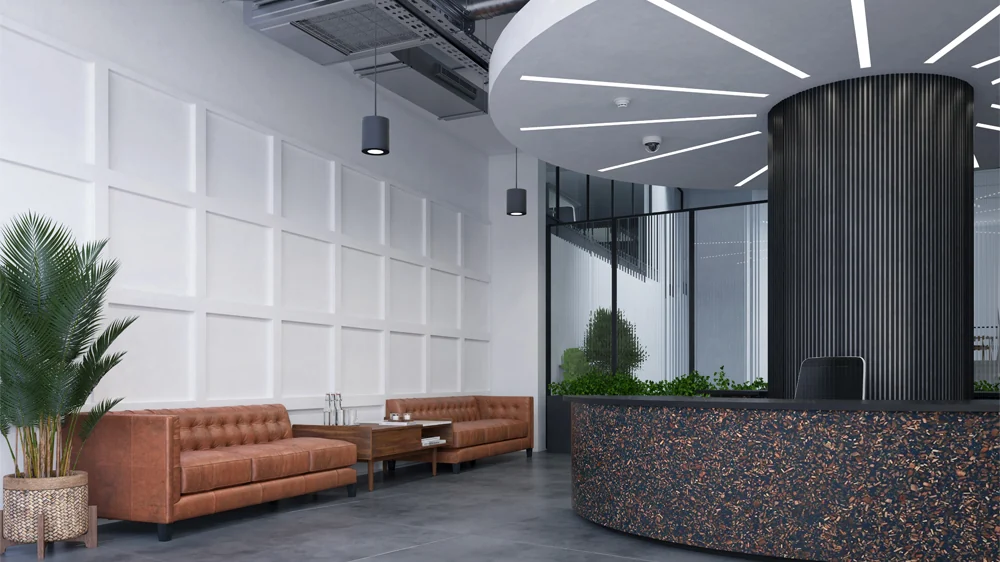
In offices, trimless linear lines can follow the architecture while controlling glare for screen work. Light on walls helps the space feel brighter without raising the lighting level on desks. See trimless lighting for offices.
Hotels and hospitality
Hotels use hidden light to create calm, warm interiors. Trimless downlights over beds and in bathrooms, and coves in lounges, keep ceilings clean. See trimless lighting for hotels and restaurants and bars.
Healthcare and education
Good vertical light helps people read signs and recognise faces, which matters in hospitals, schools and other public buildings. See trimless lighting for healthcare and education.
Homes
In homes, trimless downlights and plastered-in slots give a clean, modern look. See trimless lighting for homes.
Plan for the long term
Public transport lighting has to work for decades, and so should a good integrated scheme. Plastered-in fittings are harder to swap than surface fittings, so choose products with replaceable LED modules and drivers, and record their positions at handover. This also makes later upgrades easier.
Questions to ask at concept stage
- Which surfaces should be lit, and which should stay dark?
- Where do people need to find their way, and how will light help?
- Which spaces need warmer or cooler light, and where are the boundaries?
- How will the ceiling and wall finishes affect the light?
- Can every driver be reached for maintenance without damaging the finish?
How 299 Lighting can help
299 Lighting supplies trimless and plaster-in lighting, including bespoke profiles and linear lighting, and can help detail integrated schemes through project support. Send us your drawings to start. For other integrated options, see linear-led.com on recessed linear in plasterboard and recessedlighting.co.uk on recessed lighting for corridors.
Further reading at 299 Lighting
Next steps on trimlesslighting.com
Planning a trimless ceiling?
Send us your reflected ceiling plan. We'll come back with a shortlist, plaster-in details and lighting calculations.
Start a project →Frequently asked questions
What did the Elizabeth line win in October 2026?
It was chosen as the public's favourite in the Stirling at 30 public vote, announced at the RIBA Stirling Prize ceremony on 15 October.
Who designed the Elizabeth line lighting?
arc magazine reports that Equation Lighting Design developed the line-wide lighting scheme.
What colour temperatures does the Elizabeth line use?
According to arc, 5,000K cooler white in transition spaces and 3,000K warmer white in wayfinding areas.
What is integrated lighting?
Lighting designed as part of the architecture, such as trimless profiles, downlights and wall slots that are plastered in, rather than added as separate fittings.